The Seljuk Han of Anatolia
Seljuk Stone Sculpture
The Seljuks may have been nomads at their origins, living in readily-collapsible yurt tents that could be transported for seasonal transhumance needs and for more longer-haul migrations, but they certainly came to love in a major way the permanence represented by stone. Perhaps this desire to establish roots, via the stolid stones of buildings, became a particular goal of theirs as they set out to create a permanent home for themselves in Anatolia. Stonework is one of the most outstanding of the Seljuk decorative arts.
In addition to the finely-cut foundation stones they used in their buildings, and in hans in particular, the Seljuks excelled in carved architectural elements, such as the stone carvings seen on portals, iwan arches, inscriptions, column capitals and heads, external towers and buttresses, and rainspouts (The Karatay and Sultan Aksaray being outstanding examples). The massive Seljuk stone portals can be considered in and of themselves a stand-alone monument, by their size, attention to decoration, masterful technique and elaborate decorative schemes. The iwans, arches and columns of these doors contain many carved elements, including vegetal and geometric motifs, calligraphy and various figural elements, such as birds and animals.
In addition to their particular emphasis on architectural stonework, they also crafted major pieces of stonework, including tombstones, mihrabs, wall sculptures and, more rarely, figural sculptures.
Most of the sculpture is done in the high-relief technique, in which the background is carved away to leave the design in relief. A prominent design component of Seljuk stonework is the widespread representation of human and animal figures, which is not generally seen in other Islamic artistic cultures.
Tombstones are a particular form of expression for the Seljuks. The cemetery of Ahlat, with its forest of tall menhir-like tombstones, constitutes a major cultural history of a people in movement from their Eastern homelands. At the same time, this cemetery, with its hundreds of stelae, forms a veritable museum of stonework. Smaller cenotaph tombstones, both monumental and simple, are to be found in every region of Seljuk habitation. Although less highly-ornamented than Greek or Roman tombstones, Seljuk tombstones are often decorated with the animals and mythical beasts of the artistic canon of their Central Asian ancestors. More rarely, these tombstones bear human figures, which provide interesting pictorial evidence of the lifestyle of the era.
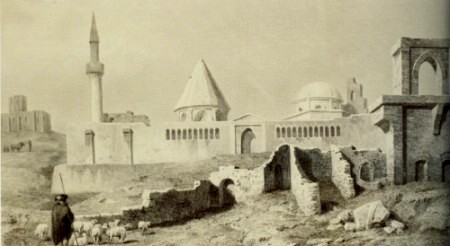
The Seljuk sultans dedicated much effort to the building of solid walls around their cities, in order to protect them from Mongol invasions. These walls and their towers were often highly-decorated. Wall sculptures were a particular way for the Seljuks to establish a visual identity of power to all those who entered their cities. The walls of Konya were lavishly-decorated, and the Seljuk historian Ibni-Bibi relates numerous details about their beauty. It is known by the drawings made by European travelers of the 19th century that certain public gardens, city gates and walls and private gardens in Konya were decorated with human statues. These walls not only included Seljuk-era carvings, but also included Greek and Roman era pieces of sculpture. These reuse pieces of antique sculpture included a famous statue of Hercules, now lost. Charles Texier (1801-1871), the French archeologist, architect and historian, was assigned the task of conducting research in Anatolia in 1833-37 by the French government. He published the results of his travels and research in Anatolia in a monumental, six-volume work entitled Description de l'Asie Mineure (1839-1848), which included numerous engravings and plans of the city of Konya. His detailed and precise drawings of the stonework sculptures on the city walls are the only remaining testaments to these Greek and Roman statues, now lost, as well as the many Seljuk pieces now held in the Ince Minare Stone Museum in Konya.
As opposed to textiles, ceramics and glass, stone is a solid material that has withstood the centuries. Seljuk art finds here an expression of its aspirations in an art form of which many examples, and luckily for us, many have come down to us today and which allow us to study the design schemes of Seljuk art. The finest collection of Seljuk carved stone objects is to be found in the Konya Ince Minare Stone Museum.
Stone Sculpture
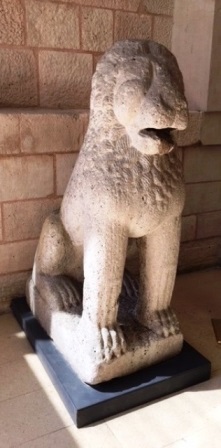
Istanbul Museum of Turkish and Islamic Art, inv. 2500, 13th c.
Modern visitors to the famed Museum of Turkish and Islamic Art in Istanbul are greeted at the entry by this lion sculpture, just as he greeted visitors to the Sultan's palace in Konya. This sculpture was originally located at the entrance to the Palace Kiosk of Alaeddin Keykubad. It came to the museum in 1908 and has been standing proud for eight hundred years as a symbol of Seljuk might.
Stone Relief
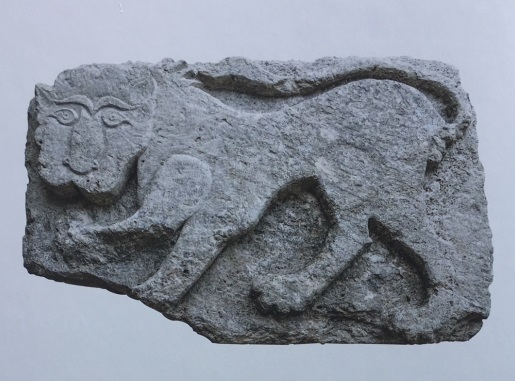
Adana Museum, inv. 270. From Jarablus, 13th c.
Drawing by Texier of the Alaeddin Mosque in Konya with the remains of the city walls to the right
Stone Relief
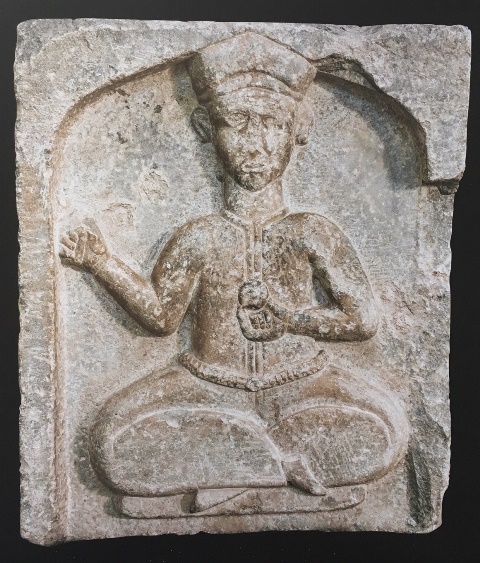
Konya Ince Minare Museum of Stonework and Woodwork, inv. 885. From the Konya Citadel, 1221-22
This figure depicts the traditional pose of a cross-legged figure in a kaftan holding what once was most certainly a goblet and a piece of fruit in his hands.
Stone Relief
Konya, Ince Minare Museum of Stonework and Woodwork, inv. 881. From the walls of the Konya Citadel, dated 1221/22
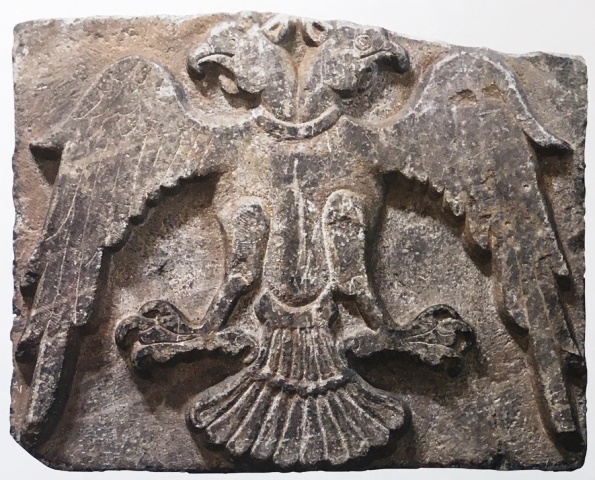
This splendid eagle is noteworthy for its realism and powerful pose. It is one of the most famous pieces of sculpture from the walls of the Konya citadel.
Stone Relief
Konya, Ince Minare Museum of Stonework and Woodwork, inv. 887. From the walls of the Konya Citadel, 1221/1222
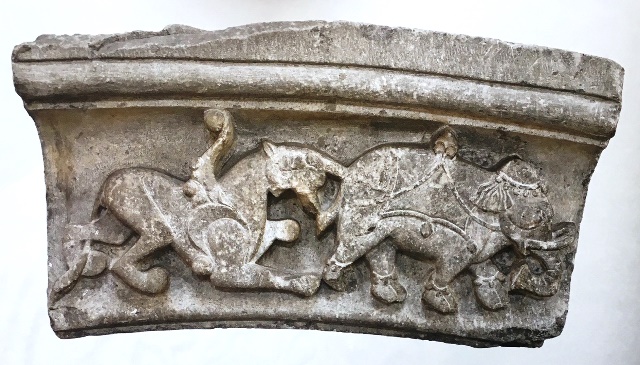
There are only 3 representations of elephants in Seljuk art, and this one is the most famous. The animal behind the elephant is hard to distinguish and may be a sphinx or a leopard. The elephant and his trappings are realistically depicted.
Stone Relief
Konya Ince Minare Museum of Stonework and Woodwork, inv. 885, from the Konya Citadel, 1221-22
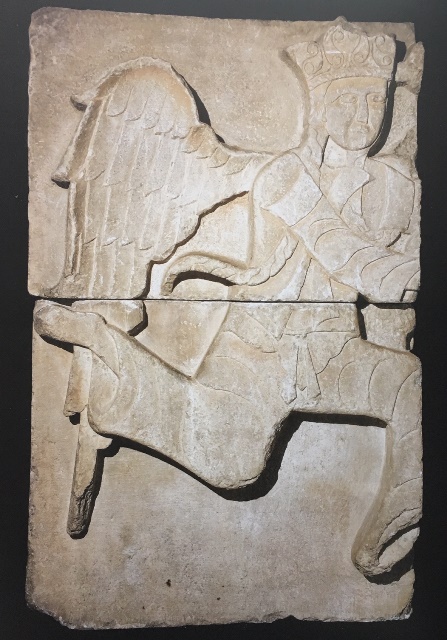
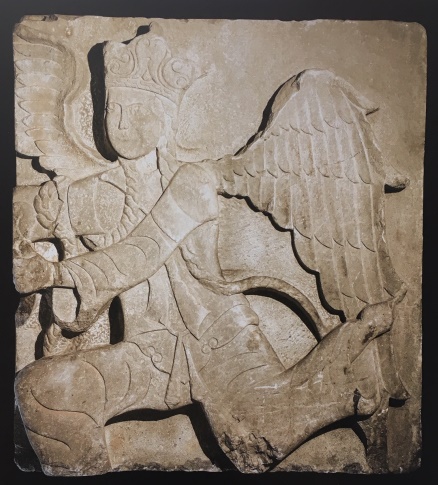
This angel (houri) figure is one of a pair.
Stone Relief
Konya, Ince Minare Museum of Stonework and Woodwork, inv. 887. From the walls of the Konya Citadel, 1221/1222
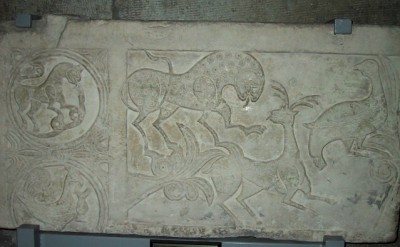
Stone carving showing a hunting scene with deer and a leopard; Konya Ince Minare Museum
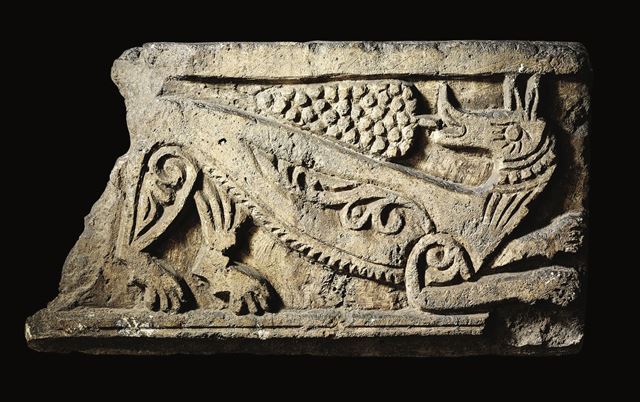
Istanbul Museum of Turkish and Islamic Art, 13th c.
A glorious and expressively-eyed wild beast; holding a pinecone (?) in is jaws and whose body is decorated with vegetal elements.
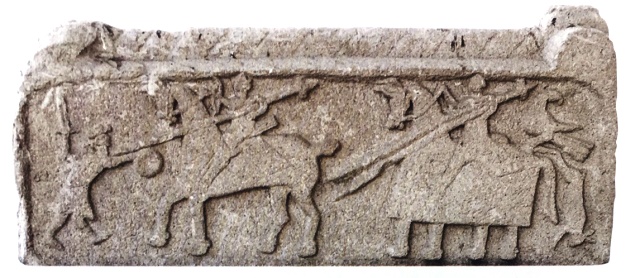
Tombstone
Afyon Museum, inv. 1555, From the Old Eymir section of Afyon, 13th century
Although roughly depicted, the figures on this tombstone portray a lively scene of 2 horsemen and a walking figure. It is interesting for its depiction of weapons, horse trappings and clothing styles. Various animals surround the figures and it is not certain if this is a hunting or a battle scene.
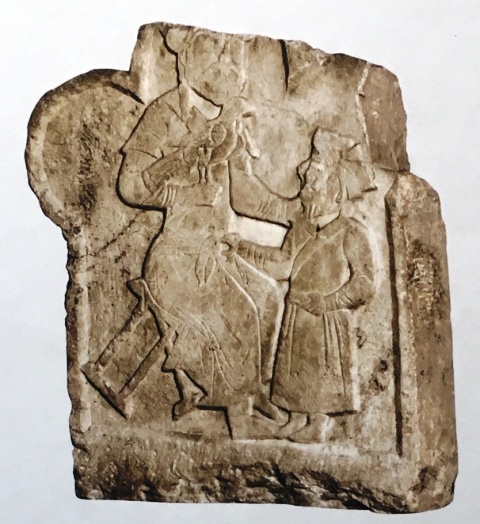
Tombstone
Konya, Ince Minare Museum of Stonework and woodwork, inv. 892. Konya, 13th c.
A rare example of a figural Seljuk tombstone. The smaller figure appears to be a child.
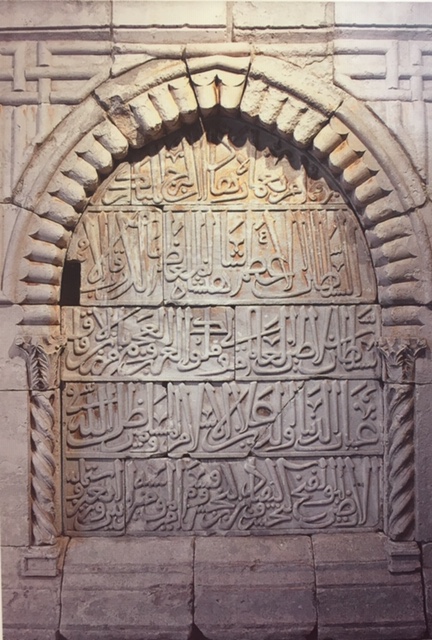
Monumental Inscription from the Antalya Fortress, 13th c. (Antalya Museum)
©2001-2026, Katharine Branning; All Rights Reserved. No part of this site may be reproduced in any form without written consent from the author. No part of this site may be reproduced in any form without written consent from the author.