The Seljuk Han of Anatolia
Collections of Seljuk Art in Museums
Major collections of Seljuk Anatolian art can be found in the following international museums:
Berlin: Pergamon Museum of Islamic Art, the Kunstgewerbemuseum
Copenhagen: The David Samlung Collection
London: The British Museum and the Victoria and Albert Collection
New York, NY: The Metropolitan Museum of Art
Paris: The Louvre Museum
Washington, D.C.: The Freer Gallery
Objects of Seljuk art may also be found in these international museums:
Brooklyn, NY: The Brooklyn Museum
Oxford, England: Ashmolean Museum
Paris: Bibliothèque nationale de France
Samarkard, Uzbekistan: The Afrasiab Museum
St. Petersburg, Russia: the State Hermitage Museum
Tabriz, Iran: the Azerbaijan Museum
The following Turkish museums contain significant collections of Seljuk Art:
KONYA
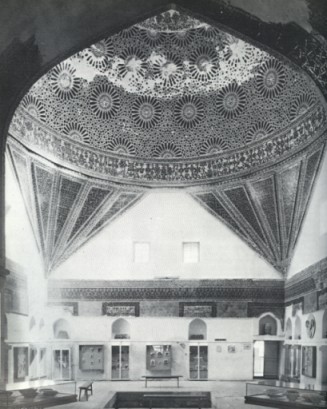
Squinch of the Karatay Museum, Konya
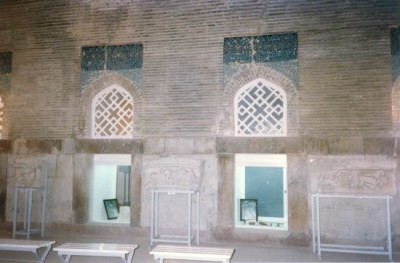
student rooms now house
display cases for the ceramics collections
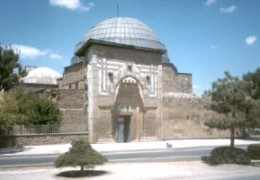
Karatay Medrese, Konya, 1251
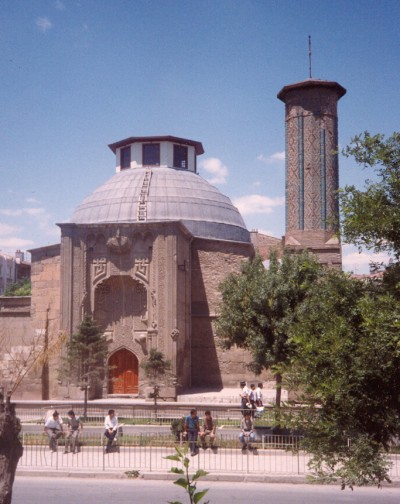
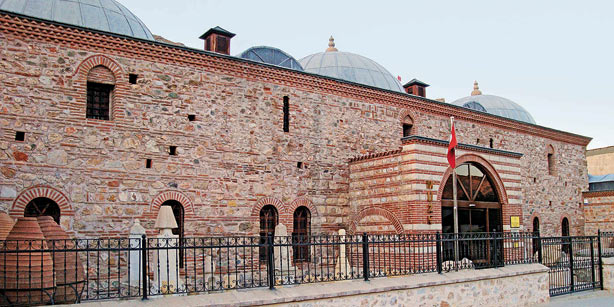
Ince Minareli Medrese Museum, Konya
Ince Minareli Museum Konya
interior showing display cases
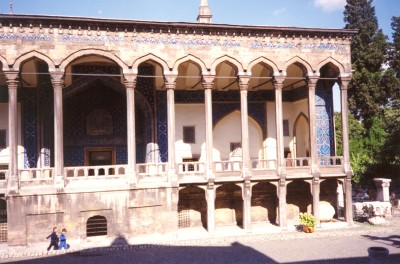
Çinili Kiosk, Istanbul, 1466
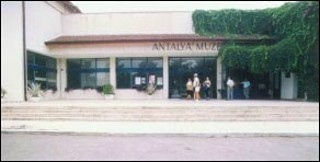
Antalya Museum
Tokat Archeology Museum
Karatay Çini Eserler Müzesi (ceramics and tiles) : Karatay Medrese Tile Museum
This museum, housed in the magnificent Karatay Medrese (built in 1251), was opened in 1955. The Karatay Medrese is a masterpiece of stone and ceramic art, and as such offers a perfect setting for the museum. A visit here and is one of the highlights of any trip to Turkey. The dazzling visual delight of the turquoise, indigo and black tiles decorating the squinches of the massive dome is breathtaking.
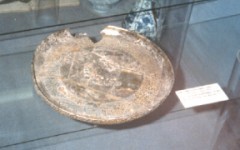
Other notable collection highlights include the reconstruction of the cruciform tile freize of the Kubadabad palace, the tiles from the Beyşehir Eşrefoğlu mosque, the luster glass plate found at Kubadabad, and the ceramic decoration of the dome of the tomb of the vizier Karatay.
Ince Minareli Medrese Taş Eserler Müzesi (Museum of Stoneword and Woodwork)
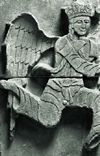
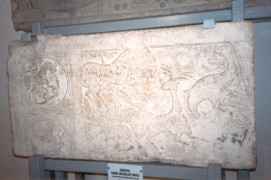
This is another impressive museum housed in a Seljuk medrese. Highlights in this museum include the famous stone carvings of the winged angel from the Konya fort, the double-headed eagle (symbol of the Seljuks), and the hunt scene with the spotted leopard. Also included are wooden door and window shutters, and tombstones.
Konya Mevlana Müzesi (carpets)
Inside the museum, classical Seljuk rugs are displayed on the walls of the Semahane. The 17 dervish cells outside the museum also display carpets, mostly of the Ottoman period. This museum houses the Konya rugs discovered at Beyşehir.
Ethnological Museum (Seljuk carpets and woodwork)
This small museum, located near the Sahip Ata Complex, contains two of the Konya carpets found in the Alaeddin Mosque.
Sahip Ata Complex (carpets)
Fine examples of Seljuk carpets and woodwork are exhibited in the newly-restored Sahip Ata complex.
ISTANBUL
Museum of Turkish and Islamic works of art (TIEM)
Located since 1983 in the Palace of Ibrahim Pasha (vizier to Sultan the Magnificent) on the historic Hippodrome square, this world-class museum houses over 40,000 works of all forms of decorative art, notably calligraphy, wood, stone, ceramics, glass and metalwork (Seljuk door knocker from the Cizre Mosque). In addition, one of the lion sculptures from the Konya Palace Kiosk is on displayThe major draw of this museum is its carpet collection. Visitors come from around the world to this museum to see its extensive carpet collections. The Museum houses 8 of the original Seljuk carpets found in the Alaeddin mosque of Konya Three of the carpets, albeit worn, are intact, three others are fragments from small carpets, and the last two are fragments from large size carpets.
There is also an informative section on the ground floor dedicated to ethnography, displaying kilim looms, dyes, wool samples and weaving utensils.
Çinili Kiosk
This elegant pavilion, built in the time of Fatih Sultan Mehmet in 1466-72, is one of the oldest examples of Ottoman civil architecture in Istanbul. It is located next to the Istanbul Archeology Museums, in the grounds next to the forecourt of the Topkapi Palace. The entrance exedra is decorated with mosaic enamels. Ceramics from the Seljuk and Ottoman period are displayed in the 6 rooms and middle court of the kiosk. There are approximately 2000 works of art in the museum and its storerooms.
Vehbi Koç Vakfi Sadberk Hanim Müzesi
Seljuk and Ottoman decorative arts are displayed in a jewel of a private museum on the Bosphorus.
Sakip Sabanci Museum in Emirgan
This new private museum, opened on June 8, 2002, houses decorative arts of all periods.
ANKARA
Museum of Anatolian Civilizations
Probably the most interesting and well-organized museum in Turkey. A walk-through visual textbook of the multiple layers of civilizations in Turkey.
Ethnographical Museum
An outstanding collection of Seljuk woodwork, including the door of the Alaeddin Mosque and the wooden sarcophagus from the Ankara Aslanhane Mosque.
ANTALYA
Antalya Museum
Although mostly devoted to antiquities of the Greek period, this intimate museum houses a section devoted to Seljuk art, notably coins. The Seljuk room contains a tile panel from Alaeddin Keykubad's kiosk behind the stage of the Aspendos theater.
The following museums in Turkey also include Seljuk objects in their collections:
Adana
Adıyaman
Afyon
Aksaray
Akşehir
Alanya
Amasya
Ankara: Museum of Pious Foundations
Diyarbakir
Elaziğ
Erzurum
Ereğli
Istanbul: Topkapi Palace Museum, Galata Mevlevihane Museum
Kayseri: Archaeological Museum, Museum of Seljuk Civilization
Kirsehir
Konya Koyunoğlu Museum
Malatya
Mardin
Niğde
Tokat
Yozgat
©2001-2026, Katharine Branning; All Rights Reserved.